© 2026 Rentokil Initial plc and subject to the conditions in the legal statement.
Quick overview
- Warehouses offer rodents everything they need: food, water, and shelter.
- A single rodent incident can mean contaminated inventory, a failed audit, or a shipment rejection.
- Loading docks are one of the most common entry points for mice and rats.
- Scheduled visits alone can leave long gaps where activity goes unseen.
- Around-the-clock monitoring helps catch rodent activity before it spreads through a facility.
A warehouse or distribution center is built for constant movement: trucks arriving, pallets shifting, inventory flowing in and out around the clock. That same activity creates ideal conditions for rodents. Mice and rats are drawn to the food, shelter, and quiet corners that storage facilities provide in abundance, and once they settle in, they rarely stay in one spot.
Effective rodent control in this kind of environment means understanding where rodents get in, what draws them, and how to catch activity before it reaches your inventory. This guide covers the specific risks warehousing and logistics operations face, and how a proactive approach helps protect product, equipment, and your supply chain.
Why warehouses and distribution centers are a target
Large, open floor plans. High ceilings. Dozens of dock doors opening throughout the day. Stacked pallets and racking that create dark, undisturbed spaces. Every feature that makes a warehouse efficient for your operation also makes it appealing to rodents looking for shelter and an easy meal.
Mice can squeeze through gaps about the width of a pencil, and rats need only a half inch opening to get inside. With constant inbound freight, there is a greater chance of a rodent problem starting, whether it arrives on a trailer or finds its way through a worn door seal. For a storage and distribution facility, the challenge is rarely a lack of attention. It is the sheer number of ways rodents can get in and the amount of space they can hide once they do.
What a rodent problem actually costs a logistics operation
The damage goes well beyond the sighting itself.
Product contamination and lost inventory
Droppings, urine, and gnaw marks can ruin entire pallets of product, especially in facilities storing food, packaging, or consumer goods. A single contamination event can mean disposing of inventory that was otherwise ready to ship.
Equipment and structural damage
Rodents gnaw constantly to manage teeth that never stop growing. Chewed wiring, damaged insulation, and compromised racking components are a common result, and in some cases, gnawed wiring has been linked to electrical fires.
Failed audits and compliance issues
Many distribution operations answer to third-party audits or retailer compliance standards. A rodent sighting during an inspection can mean a failed audit, a corrective action plan, or in serious cases, a shipment rejection from a customer who will not accept product from a facility with an active infestation.
Operational downtime
Time spent isolating affected inventory, deep cleaning, or responding to an audit finding is time a facility is not moving product. In logistics, that downtime has a direct cost attached to it.
Rodents are also a recognized health concern. According to the Centers for Disease Control and Prevention, rodents can spread disease to people both directly, through contact with droppings, urine, or saliva, and indirectly, through ticks, mites, or fleas that have fed on an infected rodent. That risk adds another reason exclusion and sanitation need to stay ahead of any activity.
Where rodents get in and where they hide
Understanding the common entry points and hiding spots is the first step toward keeping a facility protected.
- Loading docks. Worn door seals, damaged weather stripping, and gaps around dock levelers are among the most common entry points in any warehouse.
- Utility penetrations. Gaps around pipes, conduit, and HVAC lines offer rodents a direct path inside.
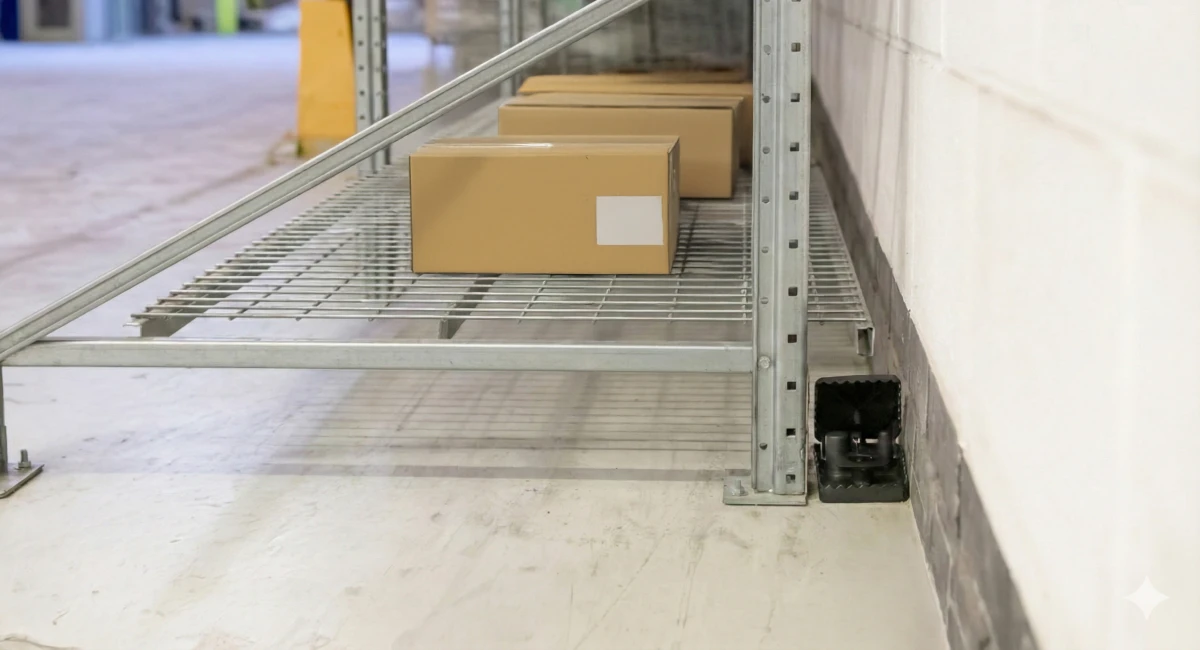
- Storage racking and pallets. Stacked goods placed against walls create concealed runways and nesting spots that are hard to inspect.
- Receiving and staging areas. Incoming freight can carry rodents in from a supplier's own facility.
Keeping stored goods elevated and a short distance from walls helps with both prevention and inspection, since it removes hidden runways and makes it easier for a technician to spot early signs of rodent infestation, such as droppings, gnaw marks, or grease trails along walls.
The gap that scheduled visits can leave open
Even a well-run pest program built around scheduled service visits has one limitation: it only sees the building at specific points in time. A technician checks devices on a set cycle, treats what they find, and moves on. Between visits, nobody is watching.
In a facility running continuous operations, that scheduled model adds up to a small fraction of total coverage across a year. If rodent activity starts the day after a service, it can have weeks to settle into racking or a storage room before the next scheduled check. In a high-volume logistics environment, weeks is more than enough time for a small issue to spread across a building.
Building a rodent prevention program that holds up
A reactive approach, waiting until a sighting or an audit finding before acting, tends to be the most expensive way to manage rodent risk in a warehouse setting. An integrated pest management approach instead combines exclusion, sanitation, and ongoing monitoring, so a facility is set up to catch and address problems early rather than respond after the damage is done.
Sealing entry points at docks and utility lines, maintaining clear inspection zones around racking, and keeping waste and spill cleanup consistent all reduce the conditions rodents rely on. Pairing that groundwork with discreet rodent detection technology adds another layer of visibility in high-risk zones like receiving and storage areas.
Keeping watch between visits with connected monitoring
Closing the gap that scheduled visits leave behind is where continuous monitoring earns its keep. Instead of waiting for the next service date to find out something changed, connected devices track activity around the clock and flag it the moment it starts, giving your team a chance to respond before a small issue spreads through racking or reaches inventory.
PestConnect monitors rodent activity continuously and alerts your local Presto-X team the moment a device is triggered, helping catch problems early and keeping your supply chain moving. If your warehouse or distribution center could use a closer look at where rodents might be getting in, get in touch with our team to request a free inspection.
Book your free pest inspection today
Our local technicians will assess your property and recommend tailored solutions. Fast, friendly, and completely obligation-free.
- Safe, targeted treatments
- Local experts, fast response
- Trusted, trained technicians