© 2026 Rentokil Initial plc and subject to the conditions in the legal statement.
Quick overview
- Federal rules require food plants to keep pests out of all processing and storage areas.
- A single rodent sighting during an audit can trigger a failed inspection.
- Receiving docks and utility penetrations are common entry points in processing plants.
- Scheduled pest control visits only capture a snapshot of facility activity.
- Continuous monitoring catches activity early and keeps documentation audit-ready.
Rodent control for food processing plants carries a different weight than it does in most other commercial settings. Food safety rules do not treat pest activity as a minor housekeeping issue. They treat it as a direct risk to the product itself. Under the Food Safety Modernization Act (FSMA), food facilities are expected to run a documented, preventive pest management program rather than respond after rodents are already a problem. This guide looks at why processing plants face such a high level of scrutiny, where rodents tend to get in, and what a program built for ongoing visibility looks like, including where commercial pest control fits into that plan.
Why food plants face a higher standard
Federal regulations are direct about this. Under the FDA's current good manufacturing practice rules, "pests must not be allowed in any area of a food plant," and facilities must take effective measures to exclude pests and protect against contamination. That single sentence shapes how seriously processing plants have to treat rodent activity compared with, say, a retail storefront.
The FSMA framework pushed food facilities toward a preventive approach rather than a reactive one. Pest management now sits alongside sanitation and hazard controls as part of a documented food safety plan, which means pest activity, corrective actions, and trending data all need to be tracked and available for review.
What is actually at stake
For a food processing plant, a rodent problem touches more than one part of the business at once.
Product contamination
Droppings, hair, and gnaw marks on packaging can contaminate ingredients or finished product, which can mean disposing of entire batches rather than risking a recall.
Audit and certification risk
Facilities that operate under GFSI-recognized schemes, such as SQF or BRCGS, face specific, detailed pest management requirements on top of the federal baseline. A rodent sighting during an audit can mean a failed inspection, a corrective action plan, or a delay in certification.
Equipment and facility damage
Rodents gnaw constantly to wear down teeth that never stop growing. Chewed wiring and damaged insulation around processing equipment can lead to costly repairs and, in some cases, create a fire risk.
Health risk to staff and product
According to the Centers for Disease Control and Prevention, rodents can spread disease to people directly through droppings, urine, or saliva, and indirectly through ticks, mites, or fleas that have fed on an infected rodent. That risk underscores why exclusion and sanitation have to stay ahead of any activity in a food production environment.
Where rodents get into a processing plant
Understanding common entry points helps a facility focus its exclusion efforts where they matter most.
- Receiving docks: Worn door seals and gaps around dock levelers are frequent entry points, and incoming shipments themselves can carry rodents in from a supplier's facility.
- Utility penetrations: Pipes, conduit, and drain lines that pass through exterior walls often leave small gaps that a mouse can use.
- Roof lines and vents: Unscreened vents, damaged flashing, and gaps around rooftop equipment give rodents another way into processing and storage areas.
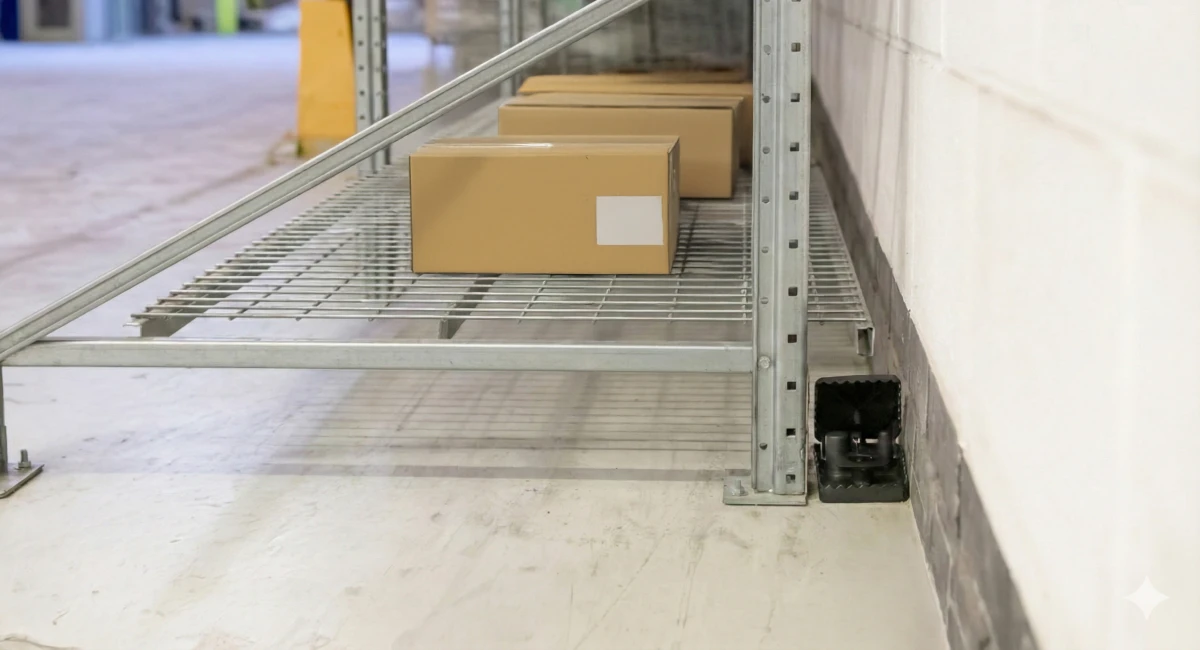
- Storage and staging areas: Stacked ingredients or packaging placed against walls create concealed runways that are hard to inspect regularly.
The limits of a scheduled-visit-only approach
A documented pest management program typically includes scheduled service visits, and those visits remain an important part of a food plant's pest control strategy. But a schedule has a built-in blind spot: it only shows what is happening in the building at the moment of the visit.
In a facility running production around the clock, that gap between visits is enough time for rodent activity to take hold in a storage room or behind equipment before the next scheduled check. For a food processing plant working under FSMA's preventive control expectations, catching activity closer to when it starts, rather than at the next scheduled stop, makes a meaningful difference to both food safety and audit readiness.
Building a pest control program around prevention and documentation
An integrated pest management approach fits naturally with what food safety regulations already expect: identify the conditions that attract rodents, correct them, and use monitoring and inspection data to guide any treatment decisions, rather than relying on routine baiting alone.
That means sealing gaps at docks and utility lines, keeping ingredient storage elevated and away from walls, and maintaining clear documentation of pest sightings, device checks, and corrective actions. Rodent control programs built around these habits tend to hold up better under audit scrutiny than ones built around a fixed service calendar alone.
Closing the gap with connected monitoring
For a food processing plant working to meet FSMA's preventive control expectations, the goal is simple: see activity sooner and document it consistently. Continuous monitoring devices track rodent activity around the clock and flag it the moment it starts, rather than waiting for the next scheduled inspection to find out something changed.
PestConnect monitors rodent activity continuously and alerts your local Presto-X team the moment a device is triggered, helping your facility respond quickly and keep a documented record ready for your next audit. If your plant could use a closer look at where rodents might be getting in, get in touch with our team to request a free inspection.
Book your free pest inspection today
Our local technicians will assess your facility and recommend tailored solutions. Fast, friendly, and completely obligation-free.
- Safe, targeted treatments
- Local experts, fast response
- Trusted, trained technicians