© 2026 Rentokil Initial plc and subject to the conditions in the legal statement.
Quick overview
- A female mouse can produce 5–10 litters yearly, yielding 25–120 pups.
- Female rats can produce up to six or seven litters and dozens of pups annually.
- Both mice and rats can start breeding again within days of giving birth.
- Mild winters and heated buildings allow rodents to breed almost year-round.
- Spotting a single rodent usually indicates that more are already established nearby.
If you have ever wondered how fast mice multiply once they find their way into a building, the short answer is faster than most people expect. A single pair of rodents can turn into a real population problem within weeks, not months. Understanding the biology behind that growth helps explain why a "minor" rodent sighting at a facility is rarely minor for long.
Here's what the numbers actually look like, and why they matter if you manage a commercial property.
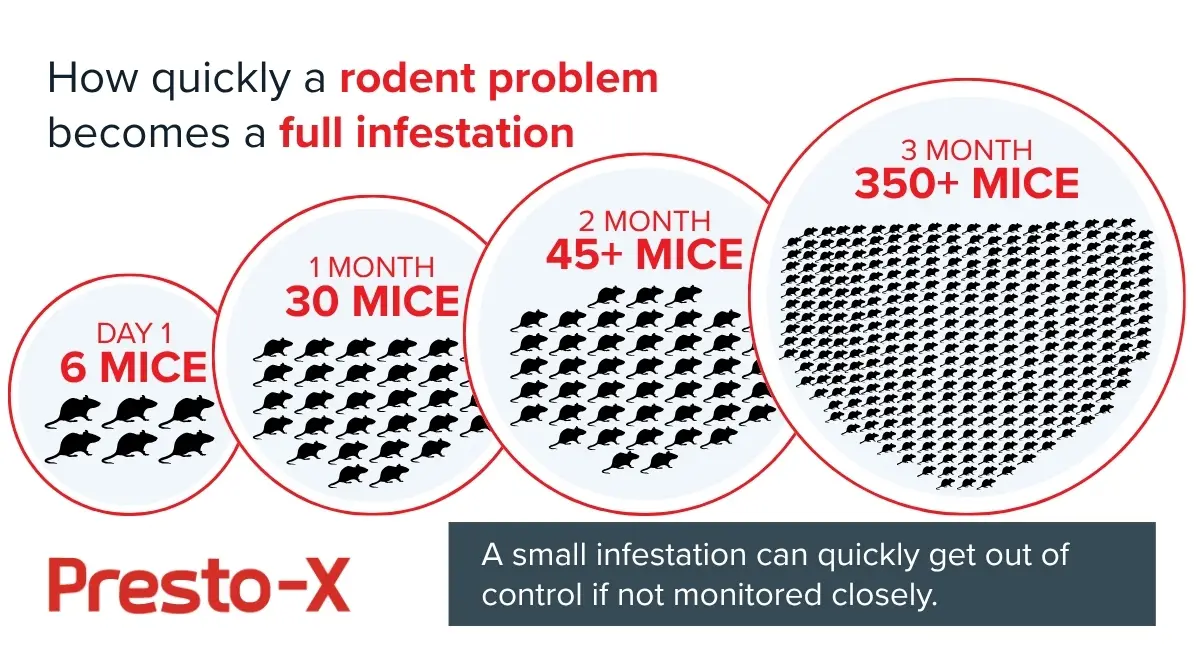
The breeding rate of mice: how fast do rodents reproduce?
Mice are built for rapid reproduction. A female house mouse reaches sexual maturity at around six weeks old. Her pregnancy lasts just 19 to 21 days, and each litter typically brings five to eight pups, sometimes more. She can conceive again within a day or two of giving birth, which is what drives the breeding rate of mice so high. Over a year, one female can produce five to ten litters, adding up to 25 to 120 offspring from a single animal.
Because those pups reach breeding age in a matter of weeks themselves, the math compounds quickly. A pair that goes unnoticed in a storage room or loading dock can become dozens of mice within a single season.
How fast do mice multiply in your facility?
The biology works the same whether it's a kitchen pantry or a warehouse floor. Indoors, mice are more likely to have steady access to food, water, and warmth, all the conditions that support near-constant breeding. That is why an indoor population often grows faster than one living outdoors, where weather and predators keep numbers in check.
How fast do rats breed?
Rats follow a similar pattern. A female rat typically reaches breeding age around three months old, with a gestation period of about three weeks and litters of six to twelve pups. Most females raise several litters a year, and under favorable conditions, a rat breeding rate of five to seven litters annually is common, adding up to dozens of young from one female alone (Internet Center for Wildlife Damage Management).
Rats also share the mouse's ability to breed again shortly after giving birth. Combined with their larger litters, this is why a facility with Norway rats can see a sharp jump in activity within a single quarter.

Why a few rodents become a full infestation so fast
Rodents are nocturnal and naturally secretive, so most facility teams notice the signs of a problem long before they see an actual animal. Droppings, gnaw marks, and grease trails along walls usually mean a population has already been breeding for weeks.
Warmer winters add to the challenge. Milder outdoor conditions, along with heated indoor spaces, let rodents stay active and reproduce for more of the year instead of slowing down in the colder months. In the South and Midwest, where humidity and flooding already push rodents toward dry, sheltered buildings, that extended breeding window means populations can build earlier in the year and stay elevated longer than many teams plan for.
For a food processing plant, warehouse, or restaurant, that speed changes the risk calculation. A single sighting often points to an established nest rather than one stray animal passing through.
Warning signs your facility's rodent population is already growing
Because breeding happens out of sight, it helps to know the early signs of a rodent problem before activity becomes obvious:
- Droppings near food storage, loading docks, or equipment
- Gnaw marks on packaging, wiring, or structural materials
- Grease marks along baseboards or walls where rodents travel
- Scratching sounds in ceilings or wall voids, especially at night
- Nesting material made from shredded paper, insulation, or fabric
Any one of these is worth investigating quickly, given how fast a small population can expand.

Staying ahead of rapid rodent breeding
Because the breeding rate of mice and rats moves so fast, the gap between routine inspections matters. A facility checked once a month can miss an entire breeding cycle, which is often enough time for a handful of rodents to become a real population.
Ongoing rodent control focused on exclusion, sanitation, and regular monitoring gives a facility a better chance of catching activity before it multiplies. For high-risk environments like food production or healthcare, tools such as PestConnect can flag activity between visits, helping your team respond before a small issue turns into a larger one.
To build a prevention plan suited to your facility, our commercial pest control team can assess your property and recommend a schedule based on your industry, layout, and local pressure.
Book your free pest inspection today
Our local technicians will assess your property and recommend tailored solutions. Fast, friendly, and completely obligation-free.
- Safe, targeted treatments
- Local experts, fast response
- Trusted, trained technicians