© 2026 Rentokil Initial plc and subject to the conditions in the legal statement.
Quick overview
- Fumigant gasses penetrate deep into structures, targeting hidden pests at all life stages.
- Fogging disperses a fine pesticide mist into the air, targeting flying and surface insects.
- Both methods require professional application.
- The best solution depends on the pest, infestation severity, and property type.
- Fumigation typically requires vacating the property; fogging involves less downtime.
Both fumigation and fogging are effective options in commercial pest control. But while the two terms often get used interchangeably, they're actually quite different treatments. Knowing which one applies to your situation can save you time, money, and a lot of frustration.
Fogging vs. fumigation: the key differences
The most fundamental difference comes down to penetration. Fumigation uses toxic gas to fill a completely sealed space, reaching pests hidden deep inside structures, wood, and cracks at every life stage, including eggs. Fogging disperses a fine pesticide mist, covering surfaces and airborne zones effectively, but without the same penetrating power.
Preparation and downtime differ significantly too. Fumigation typically requires vacating the property for 24 to 72 hours, while fogging is far less disruptive, with only a short re-entry wait once surfaces are dry and the space has been ventilated. Fumigation also tends to deliver longer-lasting results, addressing the infestation at all life stages, whereas fogging targets adult pests (and sometimes larvae) and is typically used as one component of a broader integrated pest management program rather than a standalone solution.
Now let’s look at each treatment method in a bit more detail.
What is fumigation?
Fumigation is a method that fills a sealed, enclosed space with a gaseous pesticide, known as a fumigant. The gas penetrates deep into the structure, reaching pests hiding inside wood, walls, cracks, and other inaccessible areas. Because it works at a molecular level, it can target pests at every life stage, including eggs.
This is what makes fumigation particularly effective for severe or deeply embedded infestations. It's not a first-response treatment; it's typically used when other methods haven't worked or when the scale of the problem demands a more thorough approach.
What types of fumigation are there?
There are a few different types of fumigation used in pest control:
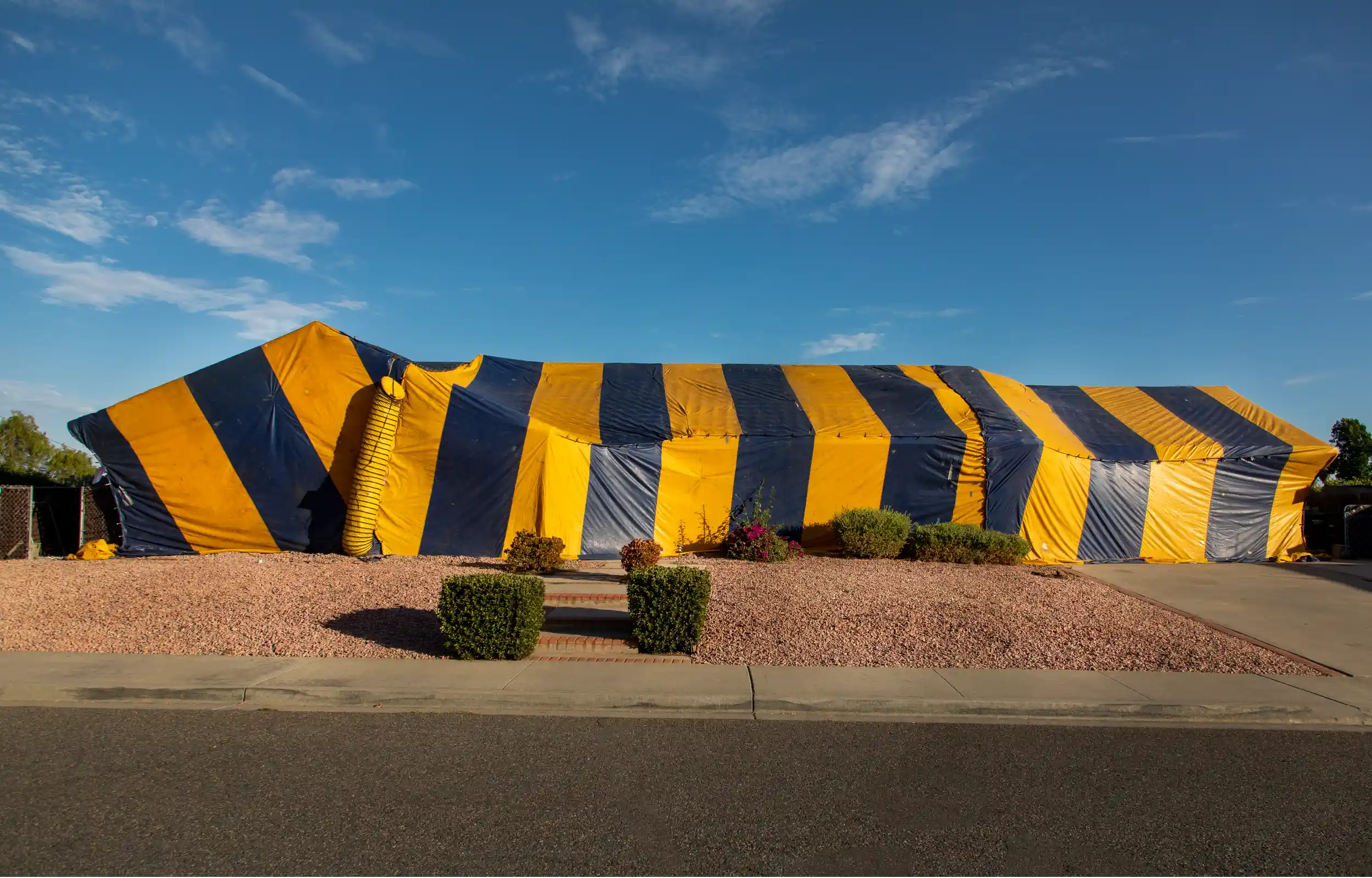
- Structural fumigation (tenting): The entire building is sealed with tarps and filled with fumigant gas. This is commonly used for drywood termite infestations.
- Commodity fumigation: Used in warehouses, grain storage, and food processing facilities to treat stored products for beetles, weevils, and moths.
- Container and space fumigation: Applied to shipping containers, vehicles, or enclosed spaces where pests may be present in goods.
What pests does fumigation target?
Fumigation is best suited for:
- Drywood termites, which live inside wood and are difficult to reach with surface treatments.
- Bed bugs, particularly in multi-unit buildings or severe infestations where heat or chemical treatments haven't resolved the problem.
- Stored product insects: beetles, weevils, and moths that infest grain, flour, and packaged goods in warehouses and food facilities.
- Wood-boring beetles, which tunnel into structural timber and can cause significant damage over time.
What is fogging pest control?
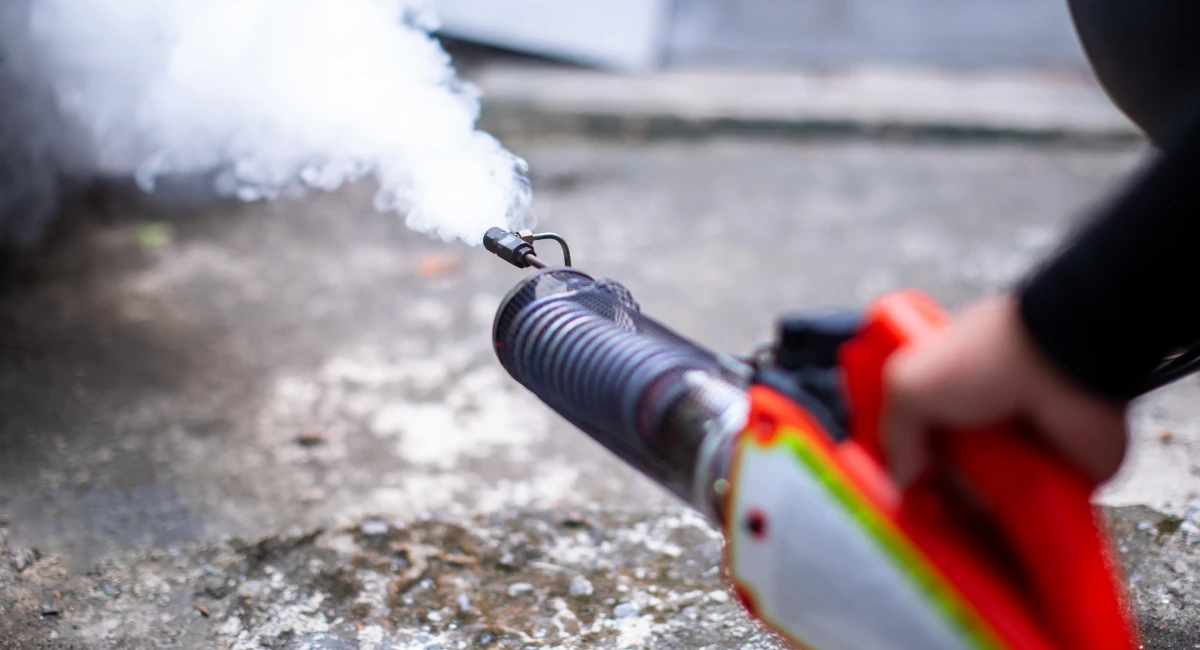
Fogging is a pest control technique that uses specialized equipment to generate ultra-low-volume (ULV) droplets of pesticide. These tiny particles are dispersed into the air and settle on surfaces, targeting insects that are airborne or resting in open areas.
Unlike fumigation, fogging doesn't necessarily require sealing the building (and never to the same extent as for fumigation). It's faster to apply, involves less preparation, and is generally used for flying insects or situations where quick knockdown is needed.
What pests does fogging target?
Fogging is most effective for:
- Mosquitoes, particularly for outdoor areas, events, or properties with standing water nearby.
- Flies, in restaurants, food facilities, and large indoor spaces where fly activity is high.
- Cockroaches and fleas, in residential or commercial settings where surface coverage is needed quickly.
- Stored product pests, in food processing plants
- Gnats and midges, in outdoor or semi-enclosed environments.
Which method is right for your situation?
The answer depends on what pest you're dealing with, how severe the infestation is, and what type of property you have. No two situations are the same, and the right choice isn't always obvious without a proper inspection.
Fumigation
Fumigation is typically the better fit when pests are deeply embedded and haven't responded to other treatments. If you have a confirmed drywood termite infestation inside a structure, bed bugs that have spread across multiple rooms or units, or stored product insects affecting a warehouse, grain facility, or food processing plant, fumigation services are often the most effective route. For businesses in food processing or storage and distribution, commodity fumigation is also a critical part of maintaining compliance and protecting product integrity.
Fogging
Fogging tends to be the right call when speed and minimal disruption are the priority. It works well for fast control of mosquitoes, flies, and other flying insects, and it's a practical option for managing large indoor spaces like restaurants, warehouses, or event venues.
If you're not sure which approach is right for your property, a thorough inspection is always the best starting point.
Can fumigation and fogging be used together?
Yes, and in many cases, a layered approach works best. A warehouse might need fumigation to address a stored product insect infestation, followed by routine fogging to manage flies and mosquitoes entering from outside.
This kind of combined strategy is at the heart of integrated pest management, which focuses on using the right tool for the right problem rather than a one-size-fits-all approach.
Picking the right pest control option
Not sure which treatment is right for your pest problem? Our technicians can assess your property, identify the pest pressures, and recommend the most appropriate approach, whether that's fumigation, fogging, or a combination of both.
Schedule a free inspection today and get a clear picture of what's going on and what to do about it.
See how Presto-X can help you address pest infestations.
Book your free pest inspection today
Our local technicians will assess your property and recommend tailored solutions. Fast, friendly, and completely obligation-free.
- Safe, targeted treatments
- Local experts, fast response
- Trusted, trained technicians