© 2026 Rentokil Initial plc and subject to the conditions in the legal statement.
Quick overview
- Drywood termite fumigation is one of the most effective ways to address a widespread infestation
- Preparation plays a direct role in how well the treatment works
- The process typically takes 24 to 72 hours
- All people, pets, and plants must leave the property before tenting begins
- Food, medications, and consumables need to be removed or double-bagged in special fumigation bags
- Always follow the technician’s advice and instructions.
If you've just been told your property needs termite fumigation, it's completely normal to feel a little overwhelmed, and the preparation list can seem long. But with the right information, the process is much more manageable than it looks, and our commercial pest control team is always on hand to answer any questions.
Why fumigation is sometimes the right call
Not every drywood termite problem requires tenting. But when drywood termites have spread through multiple areas of a structure, or when colonies are hidden deep inside walls, beams, or flooring, whole-structure fumigation is often the most thorough approach available.
Drywood termites live inside the wood they feed on, which makes them harder to locate and treat with surface-level methods. Structural fumigation works by sealing the entire building and releasing a fumigant gas that penetrates deep into wood, reaching areas that other treatments simply cannot access.
The termite fumigation process: what actually happens
Understanding the process helps you prepare for it. Here's a straightforward look at how the termite fumigation process works from start to finish.
- Before the tent goes up, a Presto-X technician will inspect your property, confirm the type and extent of the infestation, and walk you through the preparation requirements specific to your home.
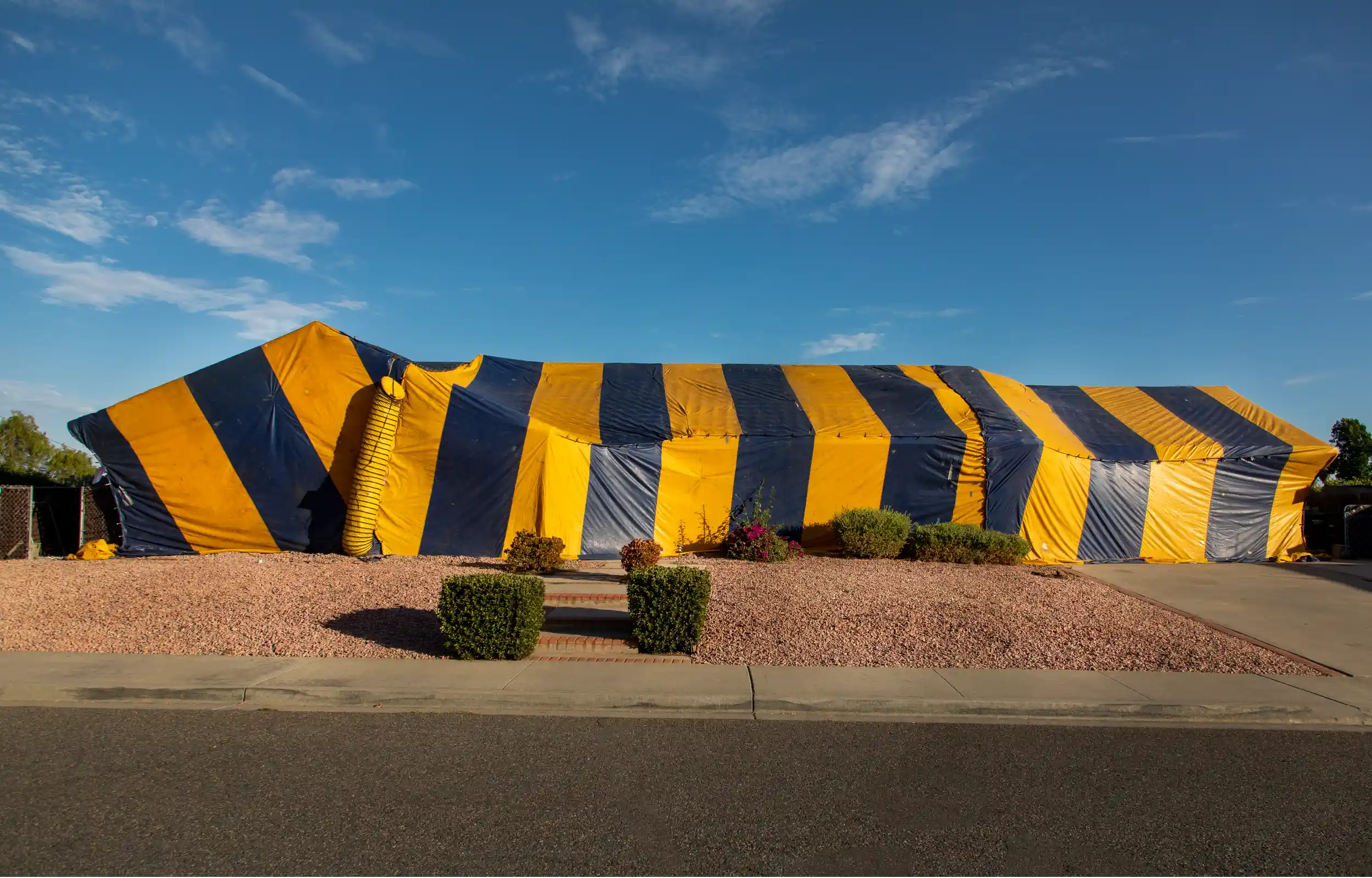
- On fumigation day, the structure is covered with large tarps that are sealed at the base to contain the fumigant gas. The gas is then released inside and left to circulate for a set period, typically 24 hours at a minimum and often longer, depending on the size of the property and outdoor conditions.
- After treatment, the tarps are removed and the structure is ventilated. Before anyone is allowed back inside, a technician will test and clear each room. Only then is the property cleared for re-entry.
The fumigant used in structural fumigation is a gas, not a liquid or spray. It leaves no surface residue on furniture, clothing, dishes, or countertops.
Fumigation preparation: What you need to do
This is the part that requires the most effort from you. Your preparation directly affects how well the treatment works, so it's worth taking it seriously. Your Presto-X technician will provide a full preparation checklist specific to your property, and answer any questions that you may have, but here's a solid overview of what to expect.
Everyone in the property needs to leave for the duration of the fumigation, including pets. Plan for at least two to three nights away.
Fish tanks require special attention. If you have an aquarium, contact your Presto-X technician as early as possible to discuss the best approach, whether that's sealing the tank with gas-resistant materials or temporarily relocating the fish.
This is the most time-consuming part of fumigation preparation, but it's straightforward once you know the rules.
Anything that could absorb the fumigant gas needs to be removed from the property or double-bagged using special bags before the tent goes up. That includes certain food, medications, etc. Not everything needs this treatment, though. Unopened cans, jars, or bottles with the original manufacturer's airtight seal intact can stay right where they are. The same goes for cosmetics, lotions, soaps, shampoos, and bottled water. These items are not affected by the fumigant and don't require any special handling.
One practical tip: Try not to stock up on groceries in the week before fumigation. The less food you have to deal with, the easier the prep will be.
If you have any questions about certain items or food, please ask your technician.
All indoor plants need to come out of the house. Outdoor plants and potted plants near the structure should also be moved away from the perimeter, at least two to three feet from the building.
Trim back any shrubs, trees, or vines that are within 12 to 18 inches of the structure. This gives the crew room to walk around the entire building and properly secure the tent or tarps. Rake back mulch or gravel from the foundation, and water the soil around the perimeter of your home the day before fumigation. Moist soil helps the tent seal more tightly at the base, which improves the effectiveness of the treatment.
Also move vehicles away from the structure, retract any awnings, and remove or lower antennas, satellite dishes, or anything attached to the roof that could interfere with the tarp.
Open all interior doors, including closets, cabinets, drawers, and attic hatches. This allows the fumigant to circulate freely throughout the entire structure. Leave blinds up and drapes open so windows are accessible.
Remove any plastic covers from mattresses. These can slow the rate at which the fumigant aerates after treatment. Most other furniture, clothing, and household items can stay in place.
If your home uses natural gas, the gas supply must be turned off and locked at the meter before fumigation begins. This is typically coordinated with your gas company. Our technician will advise you about the timeline and any steps that you need to take.
Your fumigation crew will need access to every part of the property. Make sure you've arranged to hand over keys before the property is sealed. The crew will also use a secondary locking system on all doors during the fumigation to prevent anyone from entering while the treatment is active and before the property is cleared for re-entry.
After fumigation
Once your technician has confirmed the property is clear for re-entry, you'll receive a re-entry notice. At that point, it's safe to return. Open windows and doors for a short period to air things out if you'd like, but the structure will already have been thoroughly ventilated before clearance was given.
You don't need to deep clean, rewash linens, or wipe down surfaces. The fumigant is a true gas that dissipates completely during aeration. What you will have is a home that has been thoroughly treated for drywood termites throughout the entire structure, including areas that would have been impossible to reach any other way.
For long-term protection after fumigation, it's worth talking to your technician about termite prevention strategies to reduce the risk of future infestations. Our specialist team provides a wide range of fumigation services for termites and other pests.
See how Presto-X can help address and prevent all types of termite infestation.
Book your free pest inspection today
Our local technicians will assess your property and recommend tailored solutions. Fast, friendly, and completely obligation-free.
- Safe, targeted treatments
- Local experts, fast response
- Trusted, trained technicians