© 2026 Rentokil Initial plc and subject to the conditions in the legal statement.
Quick overview
- Fruit flies, drain flies, and gnats are common small fly species in food service settings
- Breeding sites are often hidden in drains, under equipment, and in storage areas
- Strict food hygiene is essential, storing products in sealed containers and observing FIFO product rotation
- Other preventive measures include regular sanitation and moisture control
- Professional fly control helps protect your business from health code violations
Flies in a restaurant are one of the most common complaints in foodservice settings, and one of the most damaging. A single sighting by a customer can lead to a negative review, a failed health inspection, or worse. The good news is that most fly problems in bars, cafés, and commercial kitchens are preventable with the right approach.
Why flies are a serious problem for food service businesses
Beyond the obvious customer experience issue, flies in a restaurant carry real regulatory and health risks. The FDA classifies house flies as Category I vectors, meaning they are known to carry foodborne pathogens and move between filth and food. Fruit flies and drain flies, while often less conspicuous, are still indicators of insanitary conditions and can contaminate food surfaces.
From a compliance standpoint, live insects in a food service establishment are among the most common reasons for health code violations and failed inspections. A documented fly problem can result in fines, mandatory closures, and lasting reputational damage.
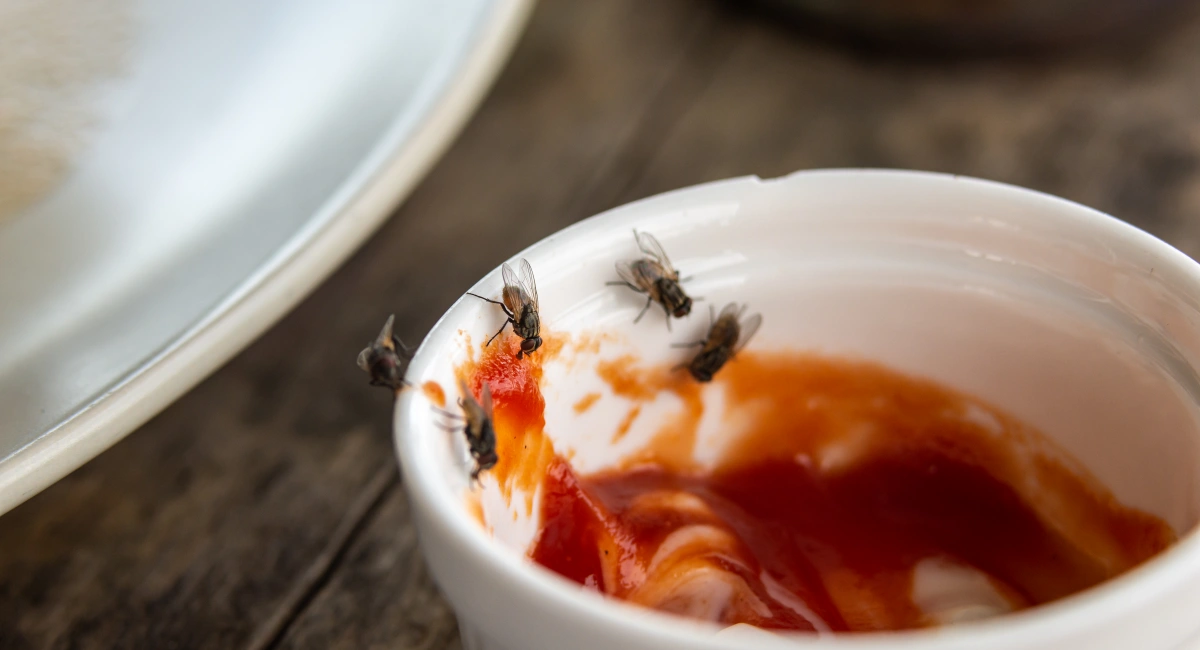
How to get rid of flies in a restaurant: practical steps
Getting on top of a fly problem in a restaurant requires more than a fly swatter. Here is what actually works.
Drains are the number one breeding site for small flies in commercial kitchens and bars. The organic slime that builds up inside floor drains, beer tap lines, and soda machine drains is ideal for fruit flies and drain flies to lay eggs. Clean drains thoroughly at least once a week using appropriate drain cleaning products, and make sure drain covers and baskets are also cleaned and kept in good condition.
Small flies need moisture to survive and breed. After closing each night, drain ice wells, empty standing water from sinks, and use industrial fans to dry wet floors. Check for leaking pipes, condensation buildup, and any areas where water tends to pool. Reducing moisture is one of the most effective ways to control flies in a restaurant environment.
Organic debris, food residue, and moisture collect under and behind kitchen equipment, prep lines, and refrigeration units. These hidden areas are prime breeding spots. Move equipment regularly to clean underneath, and use a flashlight to check hard-to-see areas. Remove access panels on ovens, coffee machines, and refrigerators to clean inside where buildup occurs.
Fruit flies are strongly attracted to produce that is beginning to turn. Using a first in, first out (FIFO) rotation system, where items with the earliest use-by dates are placed at the front of storage, helps reduce the chance of overripe produce sitting unnoticed. Store produce in sealed containers or refrigeration where possible, and inspect deliveries before they go into storage.
The sugars in beer, soda, and flavored syrups are highly attractive to small flies. Drip trays under beer taps and soda fountains, as well as flavored syrup stations, should be cleaned daily. This includes cleaning both the top and underside of trays, where residue often goes unnoticed.
Wet mop heads left on the floor overnight are a surprisingly common breeding site for fruit flies. Hang mops upside down after use so they can drain and dry properly. Replace mop heads regularly, and store cleaning buckets empty and dry.
Cracked grout, missing tiles, and gaps in flooring can collect organic debris and become breeding sites for small flies. Inspect flooring regularly and repair any damage promptly. This is especially important in areas near drains, under equipment, and in walk-in cooler thresholds.
Insect light traps are an effective tool for capturing flying insects in commercial kitchens and food prep areas. Placed correctly, they attract and trap flies without the use of chemicals and without the risk of insect fragmentation near food. Placement matters: units should be positioned away from windows and competing light sources, and at the right height to intercept fly activity. Presto-X offers Lumnia LED fly traps for kitchen and front-of-house areas, and EcoCatch Flies for outdoor seating areas.
What types of flies are most common in restaurants?
Not all flies are the same, and knowing which species you are dealing with matters. The three most common small fly types in food service environments are:
-
Fruit flies - Fruit flies are tiny, typically around 1/8 of an inch long, with tan or yellowish-brown bodies and distinctive red eyes. They are drawn to fermenting sugars, overripe produce, and alcohol residue. A female fruit fly can lay up to 500 eggs in her lifetime, and under warm conditions, the full cycle from egg to adult can take as little as eight to ten days. That means a small problem can become a large one very quickly.
-
Drain flies - Drain flies are fuzzy, moth-like insects that breed in the organic slime that builds up inside floor drains, sink drains, and soda lines. They are often mistaken for gnats and tend to appear near wet areas. If you are seeing small flies hovering near floor drains or behind bar equipment, drain flies are a likely culprit.
-
Fungus gnats and phorid flies - Fungus gnats are often found near potted plants or moist soil. Phorid flies, sometimes called humpbacked flies, breed in decaying organic matter and can be found in drains, garbage areas, and even in wall voids where organic material has accumulated. Both are indicators of a moisture or sanitation issue somewhere in the building.
What about DIY fly control?
There are plenty of DIY options on the market, from vinegar traps to sticky strips. These can help reduce visible fly numbers in the short term, but they rarely address the root cause. If the breeding site is still active, the population will keep rebuilding. DIY methods also do not provide the documentation or audit trail that many health inspectors and third-party auditors require.
For a persistent fly problem, professional commercial pest control is the more reliable route. A trained technician can identify breeding sites that are easy to miss, recommend targeted treatments, and set up a monitoring program that keeps your business protected over time.
Get help with fly control for your restaurant
If flies are showing up in your kitchen, bar, or dining area, it is worth getting a professional assessment. Our technicians understand the specific challenges of food service environments and can help identify breeding sites, recommend targeted treatments, and offer an ongoing, effective fly control solution.
Get in touch with Presto-X to schedule a free inspection and find out how our restaurant pest control services can help protect your business.
See how Presto-X can help restaurants and bars address pest infestations.
Book your free pest inspection today
Our local technicians will assess your property and recommend tailored solutions. Fast, friendly, and completely obligation-free.
- Safe, targeted treatments
- Local experts, fast response
- Trusted, trained technicians