© 2026 Rentokil Initial plc and subject to the conditions in the legal statement.
Quick overview
- German cockroaches are the most common species found in commercial kitchens across the U.S.
- They don't typically wander in from outside; they're almost always carried in on something or someone.
- They hide in warm, tight spaces near food and moisture, often behind appliances and inside wall voids
- Early detection is crucial; a single female can produce up to 350 offspring in her lifetime.
- Effective control requires an integrated approach: inspection, sanitation, exclusion, and targeted treatment.
There's a persistent myth in the food service industry that German cockroaches in commercial kitchens are just part of the job. They're not. While Blattella germanica is the most common roach species found in restaurant and food service environments across the U.S., an infestation is rarely inevitable. These pests don't crawl in through gaps in your foundation. They're almost always carried in, and that means there are real, practical steps you can take to reduce your risk.
Read on to learn more from the commercial cockroach control experts at Presto-X.
Why German cockroaches are a commercial kitchen's biggest pest problem
The German cockroach is, by a wide margin, the most common roach found in commercial kitchens. They're small, fast-reproducing, and built for life indoors. Unlike American or Oriental cockroaches, German roaches rarely survive outdoors in temperate climates. That means they don't crawl in through gaps in your foundation. Instead, they arrive via a very specific set of pathways.
According to the Illinois Department of Public Health, German cockroaches spend about 75% of their lives in hiding, emerging mainly at night to feed. Their hiding places are typically within 10 feet of a food source, which makes commercial kitchens an ideal habitat. Warm equipment motors, tight crevices behind prep surfaces, and the constant availability of food and moisture create near-perfect conditions.
Their reproductive rate makes the situation more urgent. A single female German cockroach can produce up to 350 offspring in her lifetime, and under optimal conditions, one female and her descendants could account for tens of thousands of roaches within a year. That's why early detection and a proactive restaurant pest control plan matter so much.
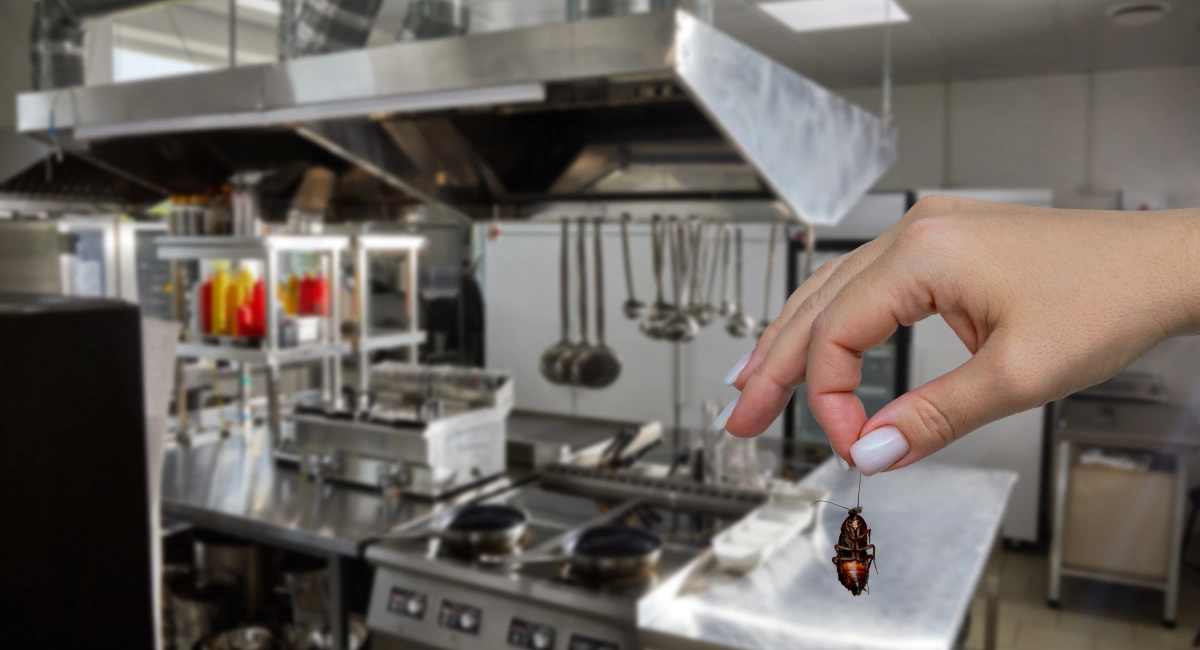
How German cockroaches get into commercial kitchens
German cockroaches don't just appear out of nowhere. They hitch rides, hide in packaging, and slip through gaps that are easy to overlook in a busy kitchen environment. Understanding the most common entry points is the first step toward keeping them out.
1. Incoming deliveries and packaging
This is one of the most common and least-suspected entry routes. Delivery trucks move between distribution warehouses, food processing facilities, and your back door. Any one of those stops could be a source of cockroaches, and cardboard boxes are a particularly attractive hiding spot.
German roaches can travel inside corrugated cardboard, inside packaging materials, and within the products themselves. Once a box is brought into your kitchen or storage area, any hitchhikers have arrived.
What helps: Inspect deliveries before they come inside. Unpack items in a designated back-of-house area and dispose of cardboard immediately. Don't let empty boxes accumulate near food storage. If you notice a spike in cockroach activity following a specific delivery, flag it with your pest management provider.
2. Third-party vendors and service contractors
Plumbers, HVAC technicians, cleaning crews, equipment repair companies… these vendors visit multiple commercial sites every day. Their tools, equipment bags, and vehicles can carry cockroaches between locations without anyone realizing it.
This is a less obvious entry point, but it's a real one. A vendor who services a heavily infested facility in the morning could unknowingly bring roaches to your kitchen in the afternoon.
What helps: Periodically inspect the equipment and bags that vendors bring into your facility. It doesn't need to be confrontational; a quick visual check is enough. Build it into your standard vendor management process.
3. Employees’ personal belongings
This is one of the most common ways German cockroaches get into commercial kitchens, and it's also one of the most sensitive to address. Employees may have an infestation at home or at a second job without knowing it. Cockroaches can travel in bags, backpacks, jackets, and lunchboxes.
According to Quality Assurance & Food Safety magazine, more than 60% of cockroach sightings in food facilities are discovered in employee break rooms or kitchens, and 39% are found in or around employee lockers. That's a significant pattern.
What helps: Designate a specific area for personal item storage, ideally away from food prep zones. Encourage regular cleanouts of lockers and personal storage areas. If you work with a pest management provider, ask them to include these areas in their monitoring program. Addressing this with employees is best done privately and without blame; most people have no idea they're carrying pests.
4. Guests and customers
This is the least common entry route, but it's worth knowing about. Guests who have cockroach activity at home can occasionally bring them in on clothing or bags. It's rare, but it happens.
What helps: Regular monitoring of dining areas, restrooms, and bar areas by your pest management provider will catch any activity early. Sticky monitoring traps are a practical, low-disruption tool for this.

Where do German cockroaches hide in a commercial kitchen?
Once inside, German cockroaches gravitate toward specific spots. Knowing where German cockroaches hide helps you focus your monitoring and sanitation efforts. Common harborage areas include:
- Behind and beneath appliances such as ovens, fryers, refrigerators, and dishwashers, where heat and moisture are concentrated
- Inside wall voids and cabinet gaps, especially near plumbing
- Under prep surfaces and shelving, particularly where food debris accumulates
- Around motor housings on refrigeration units and other equipment
- Inside drains and drain covers, where organic matter builds up
German cockroaches leave behind dark, pepper-like droppings and a distinctive musty odor in areas of heavy activity. Shed skins and egg capsules are also reliable signs of an established population. If you're seeing cockroach infestation signs during daylight hours, the population is likely already significant.
Cockroach control for your kitchen
If you're concerned about cockroach activity in your commercial kitchen, or you want to put a proactive plan in place before a problem develops, our team is here to help. Presto-X provides commercial pest control to food service businesses across the Midwest and Western U.S., with service built around your schedule and operational needs.
Speak to us about protecting your kitchen. German roaches are persistent, but they're not unbeatable. With the right protocols in place and a trusted pest management partner, most commercial kitchens can stay well ahead of the problem. Contact us to arrange a free inspection.
See how Presto-X can help bars and restaurants prevent and address pest infestations.
Book your free pest inspection today
Our local technicians will assess your property and recommend tailored solutions. Fast, friendly, and completely obligation-free.
- Safe, targeted treatments
- Local experts, fast response
- Trusted, trained technicians