© 2026 Rentokil Initial plc and subject to the conditions in the legal statement.
Quick overview
- Wasps are most active and aggressive in late summer and fall
- Restaurants, bars, and cafés are among the most attractive environments for wasps
- Yellow jackets are the most common culprit in foodservice settings
- Simple operational changes can reduce wasp activity significantly
- Active nests near your premises should always be handled by a professional
For our commercial pest control technicians, late summer is peak season for wasp problems, and food businesses tend to feel it more than most. By September, colonies are at their largest, workers are hungry, and outdoor dining areas are exactly the kind of environment they're looking for.
Why are wasps so aggressive around food businesses?
Wasps are opportunistic feeders. Through spring and early summer, they hunt insects and caterpillars to feed their larvae. But as the season shifts, their food needs change. Worker wasps start craving sugar, and restaurants provide exactly that: sweet drinks, ripe fruit, sugary residues on tables, and open trash receptacles.
Yellow jackets are the species most commonly found pestering outdoor dining areas. They're persistent, fast, and far less deterred by human presence than most people expect. Unlike bees, they can sting multiple times, and they will if they feel cornered or threatened.
The closer your premises are to green space, landscaping, or wooded areas, the higher the likelihood of wasp activity. Nests can be located surprisingly far from where the wasps are foraging, which makes identifying the source tricky without a professional assessment.
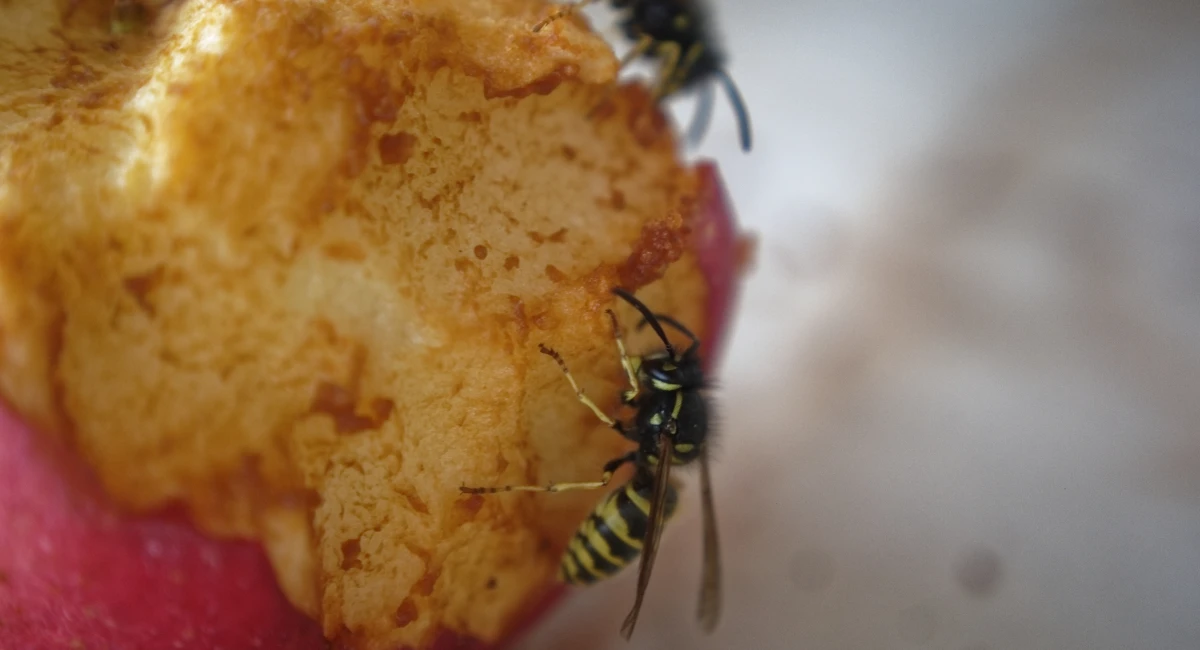
Why are wasps more aggressive in the fall?
This is the question most restaurant operators ask when wasp season peaks. The answer comes down to biology.
Through summer, wasp colonies grow rapidly. A single yellow jacket colony can contain several thousand workers by late August. At the same time, the colony is winding down. The queen stops laying eggs, the larvae disappear, and with them goes the sugary secretion that worker wasps feed on. Workers are left hungry, with no larvae to tend and no clear role in the colony.
The result: wasps get more aggressive in the fall because they're desperate for calories and have less to lose. They forage further from the nest, react more defensively to perceived threats, and are far more likely to sting with minimal provocation.
This is also why there seem to be so many wasps in September. Colony populations are at their annual peak, and every one of those workers is out foraging. For a busy outdoor dining area, that combination is a real problem.
What risks do wasps pose for your business?
Beyond the obvious disruption to the guest experience, wasps around a foodservice environment carry real operational risks.
- Guest safety and liability – Wasp stings are painful, and for some people they can trigger a serious allergic reaction. According to the CDC, stings from hornets, wasps, and bees cause an average of 72 deaths per year in the United States. If a guest is stung on your premises, that's a potential liability issue as well as a welfare concern.
- Health inspections and compliance – Pest activity of any kind is a red flag during health inspections. Wasps around food preparation or service areas can result in violations, and repeated issues can affect your operating license. Proactive pest management is far less costly than dealing with the fallout of a failed inspection.
- Reputation – Guests talk. A wasp problem that disrupts outdoor service, or worse, results in a sting, is the kind of experience that ends up in online reviews. Protecting your outdoor dining environment is part of protecting your brand.
When are wasps most active?
Wasp activity follows a predictable seasonal pattern, which makes it easier to plan ahead.
In spring, queens emerge from overwintering and start building new nests. Colony sizes are small at this point, and activity is low. Through early summer, the colony grows steadily as workers focus on feeding larvae, foraging for protein-rich insects to bring back to the nest.
By late summer, typically August and September, colonies reach their peak population. With larvae no longer needing to be fed, workers shift their attention to seeking out sugars for themselves. This is when wasps are most aggressive and most likely to cause problems around food and drink.
For most of the US, the window of highest risk for food businesses runs from mid-August through late September. Planning your pest management around this window is the most effective approach.
Practical steps to reduce wasp activity
There are operational changes that can make your premises less attractive to wasps during peak season. None of these will fully resolve the problems associated with an active nest, but they can meaningfully reduce the number of wasps foraging around your outdoor areas.
Waste management
- Keep dumpster lids closed at all times
- Clean dumpster enclosures regularly to remove residue and odor
- Use trash cans with tight-fitting lids in outdoor dining areas
- Empty bins frequently during peak service periods
Outdoor dining areas
- Clear plates, glasses, and food waste from tables promptly
- Wipe down tables and surfaces between covers
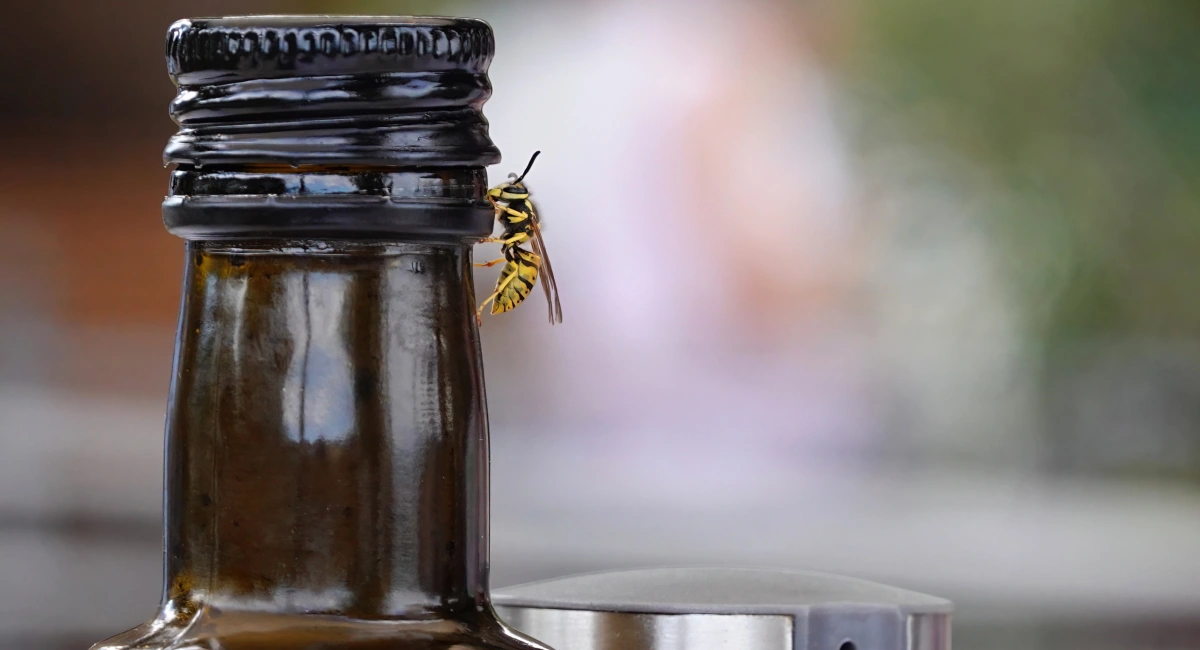
- Avoid leaving sweet drinks or open condiment bottles unattended
- Consider covered dispensers for sauces and condiments
Building and grounds
- Seal gaps around eaves, soffits, and exterior walls where wasps may nest
- Vegetation management: keep landscaping trimmed and tidy, as overgrown vegetation provides nesting sites
- Check for nests regularly in sheltered spots: under roof overhangs, in wall cavities, and around outdoor furniture storage
Dealing with an active wasp problem?
If wasps are already disrupting your outdoor service or you've spotted a nest on or near your premises, our technicians can assess the situation and recommend the right course of action. Schedule a free inspection today and get a clear picture of what's going on and what to do about it.
Our pest control services for restaurants include seasonal wasp management as part of a broader integrated pest management approach, so you're not just reacting to problems as they arise.
See how Presto-X can help restaurants and bars address pest infestations.
Book your free pest inspection today
Our local technicians will assess your property and recommend tailored solutions. Fast, friendly, and completely obligation-free.
- Safe, targeted treatments
- Local experts, fast response
- Trusted, trained technicians