© 2026 Rentokil Initial plc and subject to the conditions in the legal statement.
Quick overview
- Bed bugs can appear in any workplace, no matter how clean.
- They spread by hitchhiking on bags, clothing, and belongings.
- Nearly half of office environments have had a reported bed bug sighting.
- OSHA requires employers to address recognized pest hazards.
- Early reporting is the most effective way to limit the spread.
Bed bugs at work are more common than most employees or managers expect. According to the National Pest Management Association (NMPA), pest professionals have found bed bugs in 46% of office environments surveyed. These small, reddish-brown insects are expert hitchhikers. Anywhere people sit, store bags, or move around regularly is a potential entry point. Offices, breakrooms, healthcare facilities, hotels, schools, and many other commercial settings have all dealt with infestations.
How do bed bugs get into the workplace?
Bed bugs don't fly or jump. They travel by clinging to fabrics and soft materials carried by people. A bag set on an infested seat on the subway, a coat hung near an infested hook, or a piece of luggage returned from a hotel stay can all introduce bed bugs into a workplace without anyone realizing it.
Once inside, they find hiding spots quickly. Upholstered chairs, desk drawers, electrical outlets, wall cracks, and baseboards are all common harborage sites. They're flat enough to squeeze into a gap about the width of a credit card, which is one reason why they often go unnoticed until the population has already grown.
Certain industries face a higher level of exposure. Hospitality, healthcare, property management, and retail all involve high foot traffic, shared seating, and frequent movement of people and goods. Our bed bug control teams see demand in all of these sectors.
Signs of bed bugs in the office
Catching an infestation early is the most important factor in keeping it manageable. Here's what to watch for in a commercial environment:
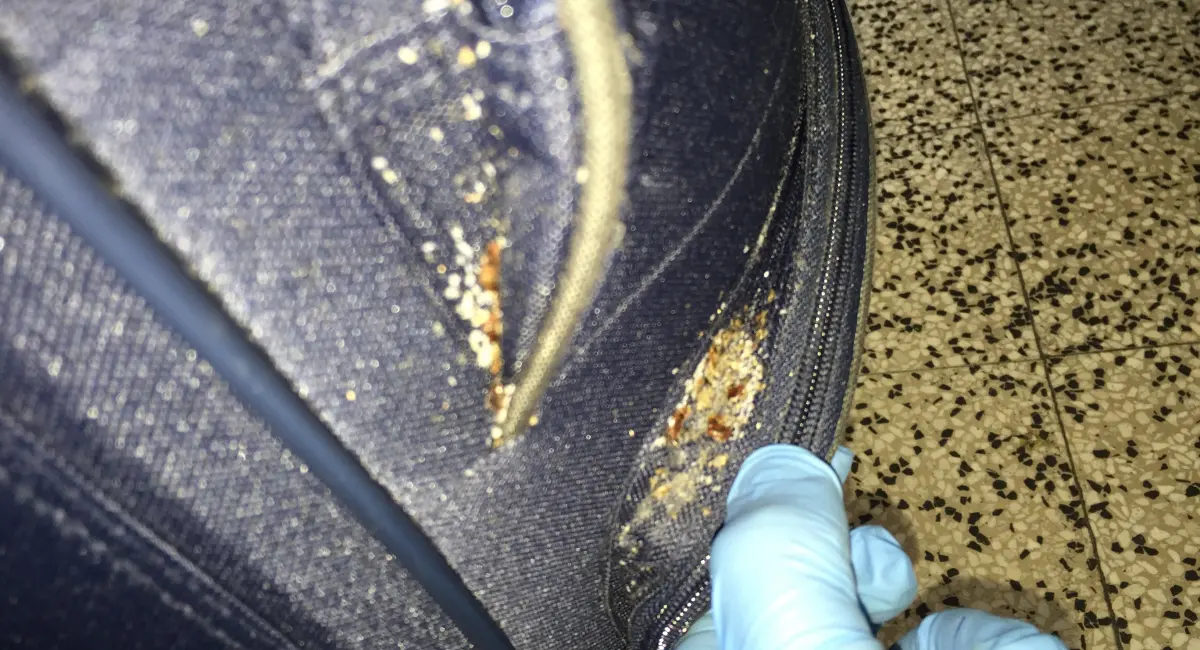
- Small rust-colored or dark spots on chairs, upholstery, or walls - this could be bed bug fecal matter
- Shed skins or pale, empty eggshells along baseboards, in crevices, or under furniture
- An unexplained sweet, musty odor in a specific room or area (more common with heavier infestations)
- Unexplained red, itchy bites on employees, particularly on exposed areas like hands, arms, or the neck
Any of these signs should be reported right away. Knowing what you're looking for means problems get caught before they have a chance to spread. It's also worth checking shared areas like break rooms and lounge seating regularly, since these spots tend to be overlooked until the signs of bed bugs are already well established.
Bed bugs in the workplace and employee rights
When it comes to bed bugs in the workplace, employees have real legal protections. Under OSHA's General Duty Clause, employers are required to provide a work environment that is free from recognized hazards capable of causing harm. A confirmed or suspected bed bug infestation qualifies as one of those hazards
In practice, employers must act promptly when a pest concern is raised. Employees also cannot face retaliation for flagging a pest-related health or safety concern. And depending on the state and circumstances, workers' compensation may be available to anyone who suffers harm as a result of an employer's failure to respond.
The question of whether an employee who is experiencing a bed bug infestation at home should go to work is a reasonable one. If you suspect your own home has bed bugs, the best approach is to notify your employer, take precautions with your belongings, and let a pest professional assess whether the workplace has also been exposed. Acting transparently benefits everyone.
What to do if bed bugs are found at work
Acting quickly limits the spread. Here's a practical approach for both employees and those managing the facility.
For employees:
- Report the sighting immediately, noting the location and approximate time.
- Avoid moving your belongings away from the affected area, as this can unintentionally spread bed bugs further.
- If you do need to remove items, seal them in plastic bags first.
- When you get home, place your work clothes directly into a sealed bag, then wash them on the highest heat setting the fabric allows.
For managers and facility teams:
- Treat every report seriously and take action the same day.
- Limit access to the affected area where practical while an inspection is arranged.
- Contact a professional pest management service for a thorough inspection - self-treatment rarely resolves a bed bug problem and can push them deeper into hiding.
- Communicate with staff calmly and factually; reducing stigma encourages faster future reporting.
Preventing bed bug exposure at work
Preventing bed bug exposure at work is far less disruptive than responding to an active infestation. Training staff on what bed bugs look like, and what to do if they spot signs of activity, is one of the most effective first steps a business can take. Awareness is free, and it means problems are far more likely to get flagged early.
The physical environment matters too. Reducing clutter in break rooms, storage areas, and shared workspaces removes the hiding spots bed bugs rely on. Where possible, opt for hard-surface furniture in high-risk settings, or use protective encasements on upholstered pieces. Any second-hand furniture should be inspected thoroughly before it enters a commercial space.
Travel is one of the most common ways bed bugs move between locations. Encouraging staff to check their bags and outerwear after overnight stays, particularly after hotel travel, is a simple habit that can prevent an outside problem from becoming an in-house one.
For industries with a higher baseline exposure, a proactive prevention plan with scheduled inspections can help catch problems before they become serious. This is especially true in healthcare pest management, where the stakes are higher and a more structured approach is usually warranted.
Getting professional help
If bed bugs are suspected or confirmed in your workplace, a professional inspection is the right next step. Our commercial pest control technicians are experienced in assessing commercial environments, locating harborage areas, and recommending targeted treatment plans designed around the needs of your business, with minimal disruption and a focus on sustained protection.
See how Presto-X can help commercial operations address pest infestations.
Book your free pest inspection today
Our local technicians will assess your property and recommend tailored solutions. Fast, friendly, and completely obligation-free.
- Safe, targeted treatments
- Local experts, fast response
- Trusted, trained technicians