© 2026 Rentokil Initial plc and subject to the conditions in the legal statement.
Quick overview
- Office bugs are more common than most facility managers realize.
- Rodents, cockroaches, flies, fleas, and bed bugs are frequently reported pests in offices.
- Pests can affect employee health, damage equipment, and put your reputation at risk.
- Early detection is key.
- Knowing what to look for can help you act before a small problem becomes a serious infestation.
Pests don't just show up in restaurants or warehouses. They are a real and recurring challenge for facility managers, property managers, and business owners across the U.S. It doesn't matter whether you run a single-floor suite or a 20-storey tower; the inside of a typical office offers everything a pest needs to settle in: warmth, food, water and somewhere dark to hide.
Why offices attract pests
Most people don't think of their office as a high-risk environment for pests. But consider what's typically inside: a break room with food and drinks, trash cans that fill up throughout the day, plumbing, HVAC systems, and plenty of dark, undisturbed spaces behind walls and under floors.
Our office pest control team reports that older buildings make it easier still. Gaps around pipework, worn door sweeps and ageing infrastructure all hand pests a way in. But don't assume a shiny new open-plan space is safe. The moment people start eating at their desks and leaving food out in shared kitchens, you've rolled out the welcome mat for pests.
There's also a seasonal rhythm worth knowing. Rodents push indoors as the weather cools in autumn, hunting for somewhere warm to nest. Flies ramp up over summer when organic matter breaks down faster. Knowing when pest pressure peaks helps you stay ahead of pest problems rather than reacting after the fact.
It's a legal point too. OSHA's General Industry Standard requires every enclosed workplace to be kept free from the entrance or harbourage of rodents, insects and other vermin, and to have an effective extermination programme in place wherever pests are found. In other words, dealing with office bugs and other pests isn't optional, it's part of your duty as an employer
The office pests worth knowing
Not every pest makes itself obvious. Some move at night, some stay hidden inside walls and ceilings, and some build large populations long before anyone spots a single sign. What they share is the potential to disrupt operations, damage property and create real health and safety risks for the people working in your building. The pests below are the ones offices encounter most often.
Rodents
A mouse can squeeze through a gap as small as a quarter of an inch. That's why even a well-sealed, modern building isn't automatically safe. Once mice or rats are in, they stick to the routes you never see: wall voids, ceiling cavities and the cable runs feeding your IT equipment. Most offices don't realise anything's wrong for weeks.
The damage runs deeper than a few droppings. Rodents gnaw through electrical wiring, which is both a genuine fire risk and a fast way to take out critical IT equipment; a single chewed cable can bring down a server. They also spread pathogens like Salmonella, E. coli and hantavirus across surfaces and food. OSHA notes that staff in rodent-infested buildings face a raised hantavirus risk, especially during cleaning that disturbs droppings or nesting material.
Signs to watch for:
- Droppings along baseboards, in cabinets, or near food storage
- Gnaw marks on packaging, furniture, or wiring
- Scratching or scurrying sounds in walls or ceilings, especially after hours
- Grease marks along walls where rodents travel regularly
Any rodent control service should include thorough facility inspections, exclusion strategies, and customized management programs designed to fit your operational schedule.
Cockroaches
Spot one cockroach in daylight and you almost certainly have a crowd hiding nearby. They're nocturnal, so a population can build quietly for weeks before anyone notices, usually in break rooms, kitchens, and anywhere food waste collects.
Cockroaches travel between floors and rooms through ventilation shafts, pipe runs and cable trays, which is what makes them so hard to contain. They carry Salmonella and E. coli, and their shed skins and droppings are a known asthma trigger.
Signs to watch for:
- A musty or oily odor in enclosed spaces
- Dark smear marks near drains or along walls
- Egg capsules in hidden areas
- Live or dead cockroaches, particularly near plumbing
An effective cockroach control program will use an integrated pest management (IPM) approach, combining monitoring, targeted treatments, and sanitation guidance to help address the problem at its source.
Flies
It's easy to wave off a fly or two, but a persistent fly problem is often pointing at a hygiene issue you can't see. The usual offenders in offices are house flies, fruit flies and drain flies, all of which are drawn to break rooms, bin areas and the organic gunk that builds up in drains.
House flies carry Salmonella and E. coli. Fruit flies breed at speed in overripe food and sugary residue. Drain flies (sometimes called moth flies) breed in the sludge inside floor drains, and their presence is usually a dead giveaway that drain cleaning has slipped.
Signs to watch for:
- Persistent fly activity around trash cans, drains, or food prep areas
- Small flies hovering near sinks or floor drains
- Fly specks on walls or windows
Fly control services include insect light traps, drain treatments, and targeted management plans for commercial facilities.
Fleas
Fleas in an office sound far-fetched until you remember what's nesting around the building. Rats, mice and birds living in or near the structure bring fleas with them, and once those fleas get indoors they move fast through carpets and soft furnishings.
You'll often hear about it through staff reporting unexplained bites or itching. One word of caution: not every 'bite' is a flea. Static electricity and fine particles blown out of ventilation systems can mimic the same symptoms, a quirk sometimes nicknamed 'cable bug'. The only way to know for sure is a professional ID, which also points you to the right fix.
Signs to watch for:
- Unexplained bites on lower legs and ankles
- Tiny dark specks (flea dirt) in carpeted areas
- Increased pest activity around the building exterior
Flea control services are available for commercial environments and include targeted treatments and monitoring to help address infestations at all life stages.
Bed bugs
Bed bugs aren't just a hotel and home problem; they hitch rides on clothing, bags and personal belongings, so any office with steady foot traffic, deliveries or visiting clients is fair game. They like to tuck into upholstered seating, hide behind electrical sockets, and crawl along carpet edges, with reception areas, lounges, and meeting rooms providing prime real estate.
Left alone, a bed bug problem escalates quickly and is genuinely tough to clear without help. Catching it early makes all the difference.
Signs to watch for:
- Small blood spots or dark fecal marks on upholstered furniture
- Shed skins in cracks and crevices around seating
- Bite marks on staff, particularly on exposed skin
Bed bug control services include detailed inspections and treatment options tailored to commercial environments.
Ants
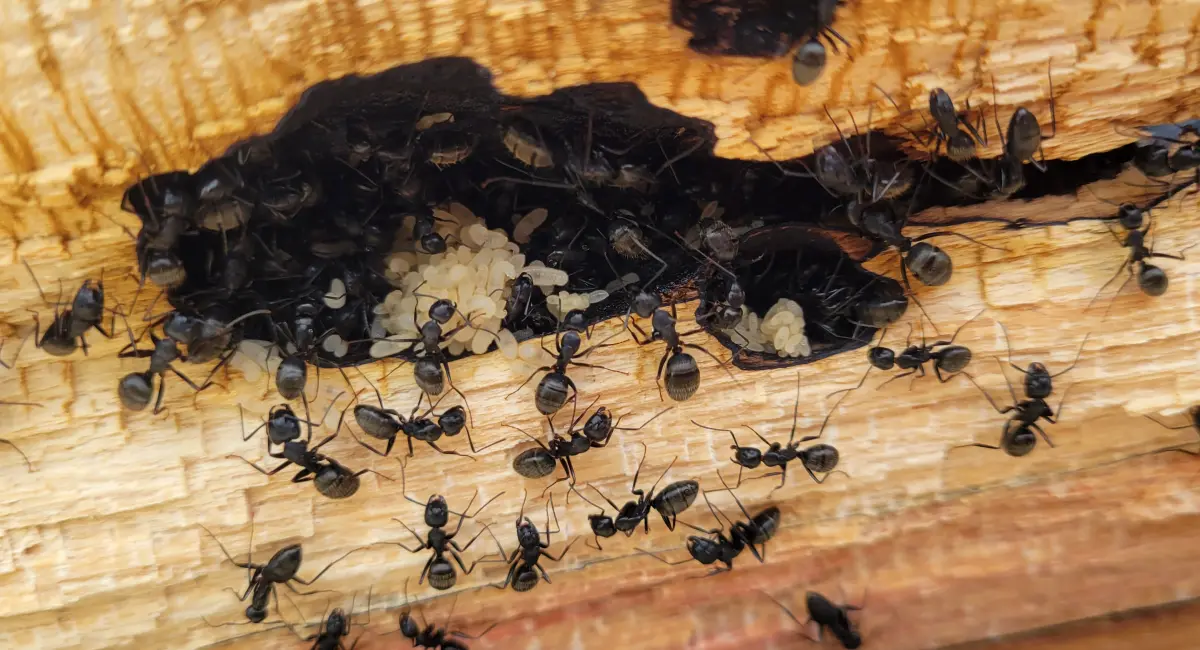
Ants are one of the most reported office pests in the country, and the cause is rarely a mystery. Food residue, sugary drinks and moisture pull them straight into break rooms and kitchens. Carpenter ants are the ones to take most seriously in older buildings: they hollow out wood to nest, and over time that means structural damage rather than just a nuisance.
Signs to watch for:
- Ant trails near food storage or prep areas
- Small piles of wood shavings near structural timber (a sign of carpenter ants)
- Ants appearing consistently in the same areas
Ant control services designed for commercial facilities should include species identification, targeted treatment, and prevention guidance.
How to make your office less inviting to pests
You can't pest-proof an office completely, but you can make it a far less appealing place to set up shop. Most of it comes down to three things: food, water, and clutter. Take those away and you've headed off the majority of problems before they ever start.
- Keep break rooms and kitchens clean. Wipe down surfaces daily, clean up spills promptly, and store food in sealed containers.
- Manage waste properly. Empty trash cans regularly and use bins with tight-fitting lids.
- Maintain drains. Clean floor drains regularly to remove organic buildup that attracts flies.
- Seal entry points. Check for gaps around pipes, doors, and windows, and address them promptly.
- Reduce clutter. Piles of paper, boxes, and stored materials create ideal nesting spots for rodents and insects.
- Schedule regular inspections. Routine commercial pest control inspections help catch pest activity early, before it becomes a larger problem.
DIY measures can help reduce risk, but they rarely address the root cause of an infestation. For lasting results, a structured pest management program is the most reliable approach.
Talk to Presto-X about pest control for your office
If you're seeing signs of pests in your office, or you want to put a proactive plan in place before problems arise, our team is here to help. We work with facility managers, property managers, and business owners to deliver tailored pest management programs that fit your schedule and your compliance requirements.
Get in touch with Presto-X to schedule a free inspection.
See how Presto-X can help commercial operations prevent and address pest infestations.
Book your free pest inspection today
Our local technicians will assess your property and recommend tailored solutions. Fast, friendly, and completely obligation-free.
- Safe, targeted treatments
- Local experts, fast response
- Trusted, trained technicians