© 2026 Rentokil Initial plc and subject to the conditions in the legal statement.
Learn about plant insect control for commercial operations.
If you’ve noticed trees on your property showing signs of stress, such as thinning crowns, fading needles, or sawdust-like material around the trunk, one possible cause could be bark beetles. These insects can burrow under bark and damage trees, sometimes leading to serious decline if not managed. The following guide explains what they are, how they live, and what you can do about them.
Bark beetles are small insects belonging to the subfamily Scolytinae. Though tiny, they can cause serious issues when their numbers grow. They are often found in forests and wooded areas, where they bore into tree bark and affect tree health. Because there are several hundred species, they are considered a common pest in many regions.
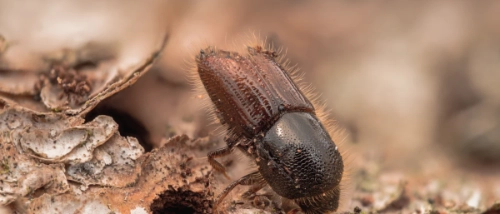
Here are some of the main traits that can help with bark beetle identification.
Staying alert to signs of a bark beetle infestation early on can reduce the impact.
The bark beetle life cycle follows four stages: egg, larva, pupa, and adult.
Because beetles carry fungi as they bore, tree damage can worsen quickly once an infestation starts.
Bark beetle habitats usually include forests, woodlands, and areas with coniferous trees, though some attack hardwoods. They thrive in stressed or weakened trees but can also infest healthy ones if populations rise.
The bark beetle diet mainly consists of the inner bark and the living tissues of trees. By feeding here, they disrupt the tree’s ability to transport water and nutrients, which can eventually kill the tree.
Bark beetle populations stretch across much of the United States, especially in the western and southern regions where large areas of coniferous forests are found. They are also present in the Midwest and Northeast, showing how widely spread these insects are. While they favor stressed or weakened trees, healthy trees can also be at risk if populations surge.
Managing bark beetles involves both prevention and control. It helps to understand the preventive steps you can take on your own, as well as when to call in professional support.
Trimming affected branches or improving tree health can help combat the effects of bark beetles, but for lasting protection and to address the root cause of the problem, it’s best to call in our technicians. We can help identify the issue and provide control solutions tailored to your situation.
Bark beetles are tiny, usually less than a quarter inch long, and dark brown to black with reddish wing covers. The larvae are white and worm-like.
Bark beetles normally attack conifers such as pine, spruce, and fir, but some species can also target hardwood trees.
Bark beetles tend to be most active in warmer months, especially spring and summer when conditions favor reproduction. Activity can continue into the fall depending on climate.
Yes, birds such as woodpeckers and some insects (like certain beetles and parasitic wasps) prey on them. These natural predators can help reduce populations, but rarely control outbreaks on their own.