© 2026 Rentokil Initial plc and subject to the conditions in the legal statement.
Contact us
Need pest control? Talk to us today
Pest control for your business
Protect your commercial space with confidence
Ants may be small, but they can quickly become a big problem. Whether they are raiding your kitchen or tunneling through wood in your walls, ant infestations are common and often challenging to handle without help.
At Presto-X, we help homeowners and businesses catch the warning signs before ants take over. From nuisance ants to damaging carpenter ants, knowing what to look for can save you time, money, and stress.
Ants live in colonies and usually move together. If you see one ant, there are likely hundreds or even thousands more nearby. Below are some clear ant infestation signs:
If you see a steady line of ants moving across a counter or along the edge of a wall, they have found a food source. Ants leave scent trails for the rest of the colony to follow, which is why you may see them marching in a straight line. This often happens in kitchens near sinks, trash cans, pet food bowls, and pantries.
Certain ants, like pavement ants, build nests under floors or between cracks. Indoors, they may push out small piles of dirt, sand, or grit near baseboards or corners. These piles can reappear even after cleaning, indicating that ants are actively tunneling below the surface.
Outdoor ants might build mounds in soil, mulch, or near cracks in pavement or concrete. Cracks in sidewalks or along the edges of buildings can also serve as entry points.
Carpenter ants often nest inside wood. If you hear faint tapping, chewing, or rustling coming from inside the walls or ceilings, especially at night, it could be ants working inside the structure. These sounds are subtle but noticeable in quiet rooms.
Carpenter ants chew through wood to make room for their nests. This creates small piles of what resembles sawdust, also known as frass. You might find this near window sills, door frames, crawl spaces, or in the attic. If it continues to appear in the same spot, it’s time to check for activity.
Winged ants, also called swarmers, are reproductive ants that leave the colony to start new ones. Spotting them inside your home means a nest may already be nearby. These ants often show up near windows or light fixtures. If you see several, it is a strong sign of an established colony.
Food is the main attraction for many ant species. Crumbs, sugary spills, and open containers can all bring ants indoors. If you notice ants inside cabinets, crawling on counters, or around food items, you may be dealing with an ant infestation.
While many ants build nests out of sight, some create visible ones in walls, floorboards, or insulation. You might spot small holes or damaged areas where ants are going in and out.
Outdoor nests might look like raised patches of dirt or sand near the foundation, flower beds, or along pathways. Indoors, nests are often hidden, but signs like cracked walls, loose tiles, or soft wood may point to where ants have settled in.
Carpenter ants are bigger than most household ants and are considered a wood-destroying insect. Unlike termites, they don’t eat the wood; they tunnel through it to build their nests. Here are some telling signs you may have a carpenter ant infestation:
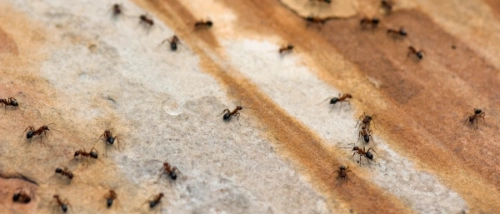
If you tap on a wall or beam and it sounds hollow or softer than it should, carpenter ants may be tunneling inside. Over time, this can weaken wooden structures.
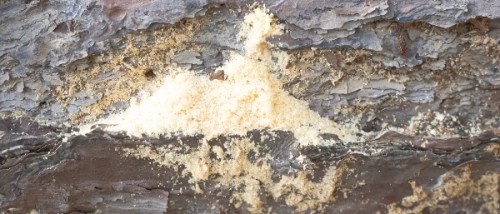
As they carve out galleries, carpenter ants push out bits of wood and waste. This debris, called frass, may collect below window frames, wooden stairs, or structural beams.
The frass looks like sawdust and may include pieces of dead ants.
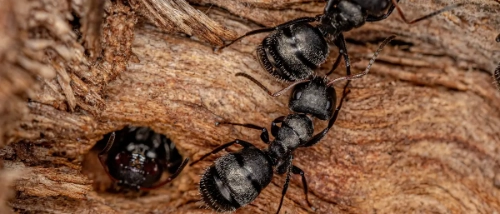
Carpenter ants are more active after dark. You may hear them moving in the walls or see a few crawling around baseboards at night. These ants are larger and often travel alone or in small groups.
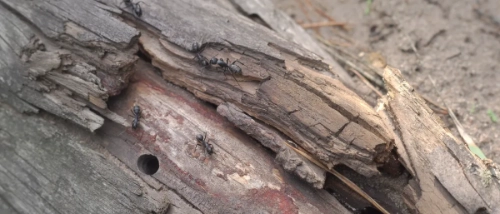
Carpenter ants often begin building nests in decaying wood outside, such as in stumps, firewood, or wooden landscaping. From there, they may enter the home in search of food or shelter.
If you have seen large black ants outside and then inside, this might be the reason.
Ants can lead to health risks, damaged goods, and even structural or electrical problems. Some ant species can carry and spread bacteria like E. coli, Salmonella, and Staphylococcus by crawling across food prep areas, containers, or surfaces used by staff or customers.
Other ants, like carpenter ants, don’t just invade; they burrow into wood to build their nests, which can weaken structures. Certain species are also known to get into electrical systems, creating short circuits or damaging sensitive equipment.
An ant infestation can damage a business's reputation. If customers, guests, or clients notice ants in your business, they may assume the space is dirty or not well-maintained.
Learn more about the damages caused by ants and how you can protect your business.
Ants seek out areas where they can find an easy food source or can establish their nest. Some of the most common places for ant activity include:
Ants don’t just wander into properties by accident. They’re looking for the basics: food, water, and shelter. Your home offers all three, especially during warmer months or after heavy rains when their outdoor nests get disturbed.
Even a few crumbs on the floor or a dripping faucet can quickly attract ants. Once one ant finds something useful, it leaves behind a chemical trail that others in the colony follow. This is why you often see long lines of ants heading to the same place.
Common ways ants can enter your home are through:
Cleaning up food, sealing entry points, and reducing moisture can help control ants; however, once they have settled in, professional treatment is the best option.
Finding ants early means you have a better chance of stopping them before they spread and cause damage. What can start as a small group of scouts can quickly grow into a whole colony. Some ants can cause food contamination, while others, such as carpenter ants, can cause serious structural damage.
Catching the signs early helps avoid expensive repairs and health risks. If you notice ant trails, frass, or swarmers, it’s time to act.
Contact Presto-X today for a professional inspection and customized treatment plan. We’re here to help you take back your space and stop ants before they do more damage.
The most obvious sign is seeing ants marching in a line, especially in your kitchen or near food. You might also notice small dirt piles near baseboards or floors, wood shavings if carpenter ants are involved, or even winged ants near windows. Finding ants in multiple areas or seeing them frequently means they’ve already established a colony.
Ants typically appear when they discover an easy food or water source. Warm weather, rain, or changes in their outdoor nest can drive them inside. Crumbs, spills, pet food, and even damp spots from a leaky pipe can attract ants quickly.
While most ants don’t bite or sting, they can still cause trouble. Some contaminate food, others can damage wiring, and carpenter ants can weaken structures by tunneling through wood. Even nuisance ants can pose a health concern if they infest stored food or spread bacteria.
If you’re seeing ants often, it’s time to take action. Spotting carpenter ants, large black ants, or winged ants indoors is also a warning sign.
That depends on the size of the infestation and the ant species. A minor issue may be resolved in a few days with targeted treatment, while larger colonies, especially those of carpenter ants, can take several weeks and may require follow-up visits.